Growing up involves learning how to manage emotions, respond to difficult situations, get along with other people, and make decisions when the right choice is not always obvious. For some children, these skills can be particularly difficult to develop. Strong emotions, impulsive reactions, frustration, conflicts with classmates, difficulty following rules, or trouble thinking about consequences can turn ordinary situations into challenging experiences.
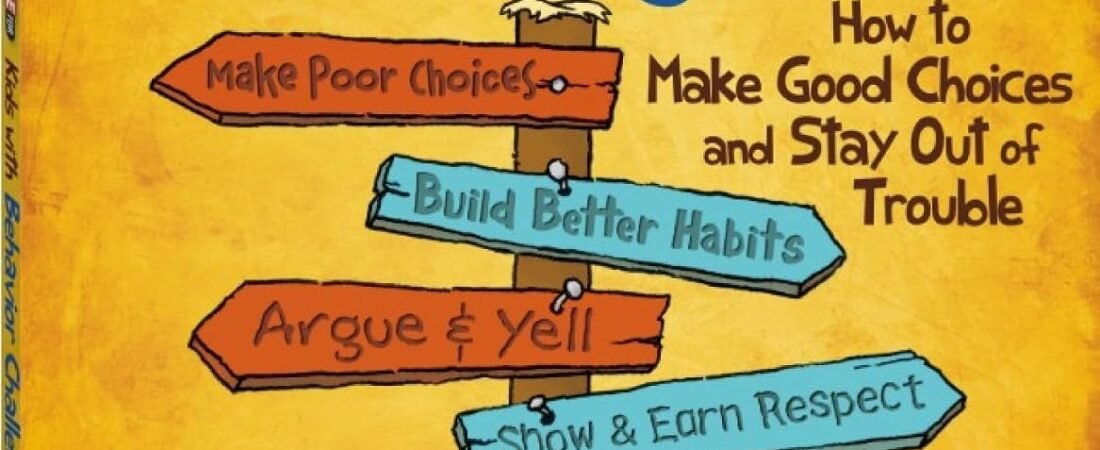
The Survival Guide for Kids With Behavior Challenges: How to Make Good Choices and Stay Out of Trouble addresses these situations from a child-focused perspective. Written by Thomas McIntyre, the book is designed to help children understand behavior, recognize situations that can lead to problems, and develop practical strategies for making more constructive choices.
The concept behind a survival guide for children with behavior challenges is important because children need more than instructions to “behave.” They need understandable strategies they can use when they are frustrated, angry, embarrassed, excited, disappointed, or under pressure from other people.
Learning these skills is a process. A child may understand what the appropriate choice is when calm but have difficulty remembering that choice during a stressful moment. Practical guidance can help bridge that gap by turning broad advice into specific actions that children can practice.
This article explores the educational approach behind the book, the types of situations it can help children think about, how parents and educators may use it as a discussion resource, and important considerations when using a behavioral guide with children.
Understanding Behavior Challenges in Children
Children express emotions and respond to situations in different ways.
Some children may react quickly when they become frustrated. Others may argue, interrupt, refuse instructions, lose their temper, act without considering consequences, or have difficulty resolving conflicts. These behaviors can create problems at home, at school, or with friends.
It is important to distinguish between a child’s behavior and the child as a person.
A child who makes a poor decision is not necessarily a “bad kid.” Behavior can change, and decision-making skills can be learned.
This distinction can influence how adults discuss behavior with children. Instead of focusing exclusively on punishment, conversations can explore questions such as:
- What happened?
- What were you feeling?
- What choice did you make?
- What happened afterward?
- What other choices were available?
- What could you try next time?
These questions encourage reflection rather than simply assigning blame.
A child-focused guide can provide language for having these conversations in a way that is easier for young readers to understand.
Key Features of The Survival Guide for Kids With Behavior Challenges
A Child-Friendly Approach
One of the central ideas behind the book is presenting behavioral guidance directly to children.
This matters because children are active participants in their own development. Adults can provide rules and consequences, but children also need opportunities to understand why certain behaviors create problems and how they can respond differently.
A child-friendly format can make abstract concepts such as self-control, responsibility, consequences, and decision-making easier to discuss.
Focus on Making Choices
The title emphasizes making good choices rather than simply avoiding punishment.
This framing can help children recognize that they often have some degree of choice in how they respond to a situation.
For example, a child might not be able to control another student’s teasing. However, the child may have choices about whether to insult the other student, walk away, ask an adult for help, or respond in another constructive way.
Recognizing the difference between what can and cannot be controlled is an important part of problem-solving.
Practical Behavioral Strategies
Behavioral guidance becomes more useful when it provides concrete actions.
Instead of simply telling a child to “calm down,” a practical strategy might involve taking a pause, moving away from a conflict, identifying the emotion, asking for assistance, or considering the likely consequence of a response.
Children can then practice these strategies outside of stressful situations so they are easier to remember when needed.
Emphasis on Consequences
Understanding consequences is an important part of decision-making.
A child may focus on the immediate benefit of a behavior without considering what happens afterward.
For instance, interrupting a class may temporarily attract attention but could also result in losing classroom privileges or disrupting other students.
Helping children think through both immediate and later consequences can make decision-making more deliberate.
Situational Learning
Behavior challenges rarely occur in isolation.
A child might behave differently at home, at school, during sports, or around particular friends.
Different environments involve different expectations.
A practical guide can help children examine specific situations and identify strategies that can be transferred from one setting to another.
How the Guide Can Be Used
Reading Together With a Parent
Parents can use the book as a starting point for conversations.
Rather than treating reading as a test, an adult can pause after a situation and ask the child what they think.
Questions might include:
“What could the character have done differently?”
“Have you ever experienced something similar?”
“What would make that situation easier?”
“What might happen after each choice?”
The purpose is not to force a particular answer but to help the child practice thinking through situations.
Classroom Discussions
Teachers and school counselors may use age-appropriate behavioral concepts as part of classroom discussions.
Topics such as handling disagreements, following instructions, dealing with frustration, and responding to peer pressure can be explored through examples.
A book like this can provide prompts for discussion without requiring that every child have the same behavioral challenges.
Preparing for Difficult Situations
One useful application is practicing before a problem occurs.
Imagine a child frequently becomes upset when another student makes fun of them.
Rather than waiting for the next incident, an adult can discuss possible responses beforehand.
The child can practice:
- Recognizing the situation.
- Identifying the emotion.
- Taking a pause.
- Considering possible responses.
- Choosing a safer or more constructive response.
- Getting adult help when appropriate.
Rehearsal can make a strategy more familiar.
After a Difficult Incident
A behavioral guide can also support reflection after something has gone wrong.
The conversation can focus on learning rather than humiliation.
For example:
“What happened first?”
“What were you thinking at that moment?”
“What did you do?”
“What happened next?”
“What could you try differently next time?”
This type of reflection can help children connect actions with consequences.
Developing a Personal Strategy List
Parents and children can create a short list of strategies that work for particular situations.
A child might identify:
- Taking a short break
- Asking for clarification
- Walking away from an argument
- Using words instead of physical reactions
- Asking an adult for help
- Counting or breathing slowly
- Waiting before responding
- Thinking about what could happen next
Not every strategy works equally well for every child or situation.
The goal is to build a collection of practical options.
Understanding the Difference Between Feelings and Actions
A particularly important lesson for children is that feelings and actions are not the same thing.
A child can feel angry without hitting someone.
A child can feel frustrated without breaking something.
A child can feel embarrassed without insulting another person.
A child can disagree with an adult without becoming aggressive.
Feelings themselves are not necessarily the problem. What matters is learning safe and appropriate ways to respond to those feelings.
This distinction can make behavioral conversations more constructive.
Instead of telling a child that they should not feel angry, an adult can acknowledge the emotion while discussing what the child can do with it.
For example:
“Being angry is okay. Hitting someone is not. Let’s think about what you can do when you are angry.”
That approach separates emotional experience from behavior.
Who May Find This Book Useful?
Children Who Struggle With Impulsive Decisions
Some children act quickly and think about consequences afterward.
Practical decision-making strategies can help create a pause between an impulse and an action.
That pause can provide an opportunity to choose a different response.
Children Experiencing Frequent Conflicts
Children who regularly experience disagreements with classmates, siblings, teachers, or parents may benefit from learning how to examine conflict situations.
The goal is not to place responsibility for every conflict on the child.
Instead, the child can learn to identify which parts of a situation are within their control.
Parents Looking for Conversation Tools
Parents may understand that their child needs help with behavior but have difficulty explaining these issues without turning every discussion into an argument.
A child-oriented book can provide neutral examples that make conversations easier to start.
Instead of saying, “You always do this,” a parent can discuss a situation presented in the book and ask what the child thinks.
Educators and School Support Staff
Teachers, counselors, and other educational professionals may find behavioral concepts useful when helping children discuss classroom behavior, peer relationships, self-control, and problem-solving.
Any use in a school setting should be adapted to the child’s age and the educational environment.
Children Learning Social and Emotional Skills
Behavioral challenges are not limited to children who have a formal diagnosis.
Many children need support while learning skills such as patience, emotional regulation, conflict resolution, communication, and responsible decision-making.
The concepts can therefore be useful as general life skills, provided they are presented appropriately.
Important Things to Consider
Avoid Labels That Define the Child
Adults should be careful about repeatedly describing a child as “bad,” “difficult,” “trouble,” or “problematic.”
Labels can become part of how children see themselves.
A more constructive approach is to describe the specific behavior.
For example:
“You interrupted several times during the lesson.”
is more useful than:
“You’re a disruptive kid.”
Specific descriptions create opportunities for specific solutions.
Behavioral Difficulties Can Have Different Causes
Children may behave in challenging ways for many reasons.
Possible factors can include stress, frustration, environmental changes, communication difficulties, family circumstances, learning difficulties, developmental differences, sleep problems, social difficulties, or other concerns.
A parenting book cannot determine why a particular child behaves in a certain way.
If behavior is persistent, severe, or significantly affecting a child’s safety, education, relationships, or daily functioning, parents should consider discussing the situation with an appropriately qualified pediatric, mental-health, or educational professional.
The Book Is Not a Diagnostic Tool
A guide about behavior should not be used to diagnose a child.
Behavioral symptoms can appear in many different circumstances, and similar behaviors can have very different explanations.
Professional assessment may be appropriate when concerns are persistent or significant.
Age and Development Matter
Strategies should be appropriate for the child’s developmental level.
A strategy that works for a twelve-year-old may not be suitable for a preschool child.
Adults should consider the child’s communication skills, maturity, attention span, and ability to understand consequences.
Safety Takes Priority
Not every conflict should be handled by simply walking away or trying to solve the problem independently.
If a child is facing bullying, threats, abuse, violence, dangerous behavior, or another serious safety issue, adult intervention may be necessary.
Children should understand that asking a trusted adult for help is a responsible choice, not a failure.
Teaching Children to Pause Before Acting
One of the simplest behavioral skills is creating a pause.
A child may experience a sequence like this:
Trigger → Emotion → Impulse → Action → Consequence
For example:
A classmate makes a comment.
The child becomes angry.
The immediate impulse is to insult the classmate.
The child responds.
The conflict escalates.
A useful alternative is:
Trigger → Emotion → Pause → Options → Choice → Consequence
The pause creates space for the child to consider alternatives.
The pause does not have to be long.
Even a few seconds can provide an opportunity to ask:
“What happens if I do this?”
“Is there another way?”
“Do I need help?”
This is a skill that can be practiced repeatedly.
Teaching Children to Think About Consequences
Consequences are not always immediate.
A child may need help thinking beyond the present moment.
One simple exercise is to consider three questions:
What might happen right away?
What might happen later?
How might this affect someone else?
Suppose a child wants to leave class without permission.
The immediate consequence might be getting away from an uncomfortable situation.
The later consequence could involve disciplinary action or missing important work.
Another consequence could involve the teacher becoming concerned.
Thinking through several levels can help children recognize consequences that are not immediately visible.
Handling Peer Pressure
Peer influence becomes increasingly important as children grow.
A child may make a poor decision because friends are encouraging them to do something they know is against the rules.
Decision-making strategies can help children prepare for these situations before they occur.
Possible approaches include:
- Saying no clearly
- Leaving the situation
- Suggesting another activity
- Staying with a trusted friend
- Contacting a parent or trusted adult
- Explaining that they do not want to participate
Children can also practice these responses through role-play.
Role-play allows a child to rehearse words and actions without the pressure of a real situation.
Conflict Resolution and Communication
Children do not automatically know how to resolve disagreements.
They may need to learn specific communication skills.
One useful structure is:
Describe the problem.
Explain how you feel.
Say what you need.
Listen to the other person.
Look for a workable solution.
For example, instead of:
“You’re always taking my things!”
a child might learn to say:
“I don’t like it when my things are taken without asking. Please ask me first.”
This does not guarantee that the other person will cooperate, but it provides a more constructive starting point.
Comparing General Approaches to Behavioral Guidance
There are several broad ways adults can help children develop better behavior.
Punishment-Focused Approaches
These approaches concentrate primarily on consequences after unwanted behavior.
Consequences can sometimes be an important part of setting boundaries, but punishment alone may not teach a child what to do differently next time.
Skills-Based Approaches
Skills-based approaches focus on teaching behaviors such as emotional regulation, communication, problem-solving, and decision-making.
The child is given tools that can be practiced.
Collaborative Approaches
Collaborative approaches involve adults and children discussing problems together.
The adult maintains appropriate boundaries while allowing the child to participate in identifying solutions.
Structured Routine Approaches
Some behavior problems can be influenced by predictable routines and clear expectations.
Consistent schedules, instructions, transitions, and consequences can reduce confusion and make expectations easier to understand.
Professional Support
When behavioral difficulties are persistent or significantly interfere with daily life, professional support may be appropriate.
A pediatrician, psychologist, counselor, therapist, teacher, or other qualified professional may help determine what kind of support is appropriate.
These approaches are not necessarily mutually exclusive. A child may benefit from clear boundaries, explicit skill teaching, consistent routines, and professional guidance when necessary.
Creating a Home Environment That Supports Better Choices
The environment around a child can influence how easy or difficult it is to make good decisions.
Parents can support behavioral learning by establishing clear expectations.
Rules should be understandable and specific.
Instead of:
“Behave yourself.”
a clearer instruction might be:
“Keep your hands to yourself while your brother is talking.”
Predictability also matters.
If consequences change dramatically from one situation to another, children may have difficulty understanding expectations.
Consistency does not mean that every situation must receive exactly the same response. Context matters. It means that expectations are communicated clearly enough for the child to understand what adults are asking.
Reinforcing Positive Behavior
Children often receive substantial attention when something goes wrong.
Positive behavior can receive less attention because it is expected.
Adults can deliberately recognize constructive choices.
For example:
“I noticed you were frustrated, but you asked for help instead of yelling.”
This identifies the exact behavior that was helpful.
Specific recognition can make it easier for a child to understand which action should be repeated.
The goal is not to praise every ordinary behavior excessively. It is to make important progress visible.
Helping Children Learn From Mistakes
Mistakes are part of learning.
A child who makes a poor choice needs to understand that consequences matter, but the incident can also become an opportunity to develop a better strategy.
A useful conversation might involve four stages:
Responsibility: What happened and what part did you control?
Reflection: What were you feeling or thinking?
Repair: Is there something you can do to make the situation better?
Planning: What will you try next time?
This approach moves beyond simply asking whether the child was “good” or “bad.”
It focuses on learning.
Frequently Asked Questions
What is The Survival Guide for Kids With Behavior Challenges about?
The book focuses on helping children understand behavior, make more constructive choices, deal with challenging situations, and think about the consequences of their actions.
Who is the author?
The book is written by Thomas McIntyre.
Is the book intended only for children with diagnosed behavioral conditions?
No. The concepts can also be used to discuss general skills such as self-control, decision-making, conflict resolution, and responsible behavior. However, the book should not be treated as a diagnostic or therapeutic substitute for professional assessment.
Can parents read the book with their children?
Yes. Reading together can provide opportunities to discuss examples and connect them with situations the child encounters in everyday life.
Can teachers use behavioral guides in the classroom?
Potentially. Educators can use age-appropriate behavioral concepts as discussion prompts or as part of broader social-emotional learning activities.
What does “making good choices” mean for a child?
It generally means thinking about available responses, considering likely consequences, respecting appropriate boundaries, and choosing an action that is safer or more constructive.
Can children control their emotions?
Children cannot necessarily choose which emotions they experience. They can gradually learn skills for recognizing emotions and managing how they respond to them.
What should a parent do if behavior problems are severe?
If behavior creates significant safety concerns or substantially interferes with school, family life, friendships, or daily functioning, parents should consider seeking guidance from an appropriately qualified professional.
Should children be expected to solve every problem independently?
No. Children should know when to seek adult assistance. Serious bullying, violence, abuse, threats, or dangerous situations require appropriate adult intervention.
Can role-playing help children practice behavior skills?
Role-playing can provide an opportunity to rehearse responses to hypothetical situations. Practicing when a child is calm may make certain strategies more familiar when a difficult situation occurs.
How can parents avoid making behavioral discussions feel like punishment?
Using neutral language, discussing specific behaviors rather than personal labels, listening to the child’s perspective, and focusing on future strategies can make the conversation more constructive.
Is the book a replacement for professional behavioral support?
No. A book can provide educational ideas and conversation tools, but it cannot provide an individualized assessment or treatment plan.
Conclusion
Children develop decision-making and self-management skills gradually. Learning how to respond to frustration, disagreements, peer pressure, rules, and strong emotions takes practice, guidance, and time.
The Survival Guide for Kids With Behavior Challenges: How to Make Good Choices and Stay Out of Trouble approaches these challenges from the child’s perspective, focusing on practical decision-making and strategies for handling situations that can lead to trouble.
One useful aspect of this type of resource is its emphasis on behavior as something that can be examined and improved. A child can make a poor choice without being defined by that choice. With appropriate guidance, the child can learn to identify triggers, pause before reacting, consider consequences, communicate more effectively, and ask for help when necessary.
Parents and educators can use behavioral books as conversation tools rather than simply presenting them as instruction manuals. Discussing examples together, practicing possible responses, role-playing difficult situations, and recognizing constructive choices can help turn general advice into practical skills.
At the same time, every child is different. Behavioral difficulties can have many possible causes, and a book cannot determine what is happening with a particular child. When behavior is persistent, severe, or creates significant difficulties at home, school, or in relationships, professional guidance may be appropriate.
The broader lesson is that good decision-making is learned through repeated practice. Children need clear expectations, opportunities to make choices, appropriate boundaries, and supportive adults who can help them learn from mistakes.
For parents, educators, and caregivers looking for a child-focused resource about behavior, choices, consequences, and practical problem-solving, this book can provide material for conversations about the everyday situations children may find difficult.