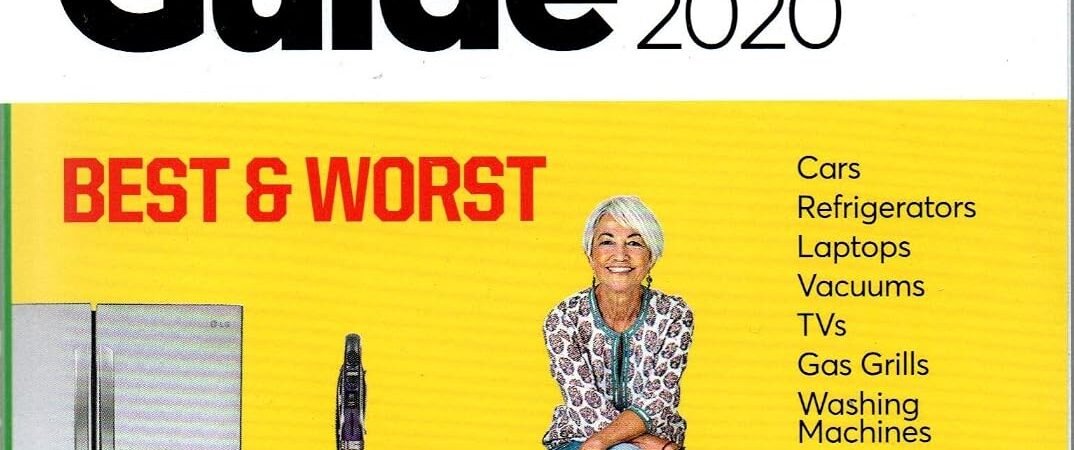
Choosing a major consumer product can be surprisingly difficult. Whether someone is researching a refrigerator, washing machine, television, vehicle, smartphone, mattress, appliance, or another household purchase, there can be dozens of specifications and countless opinions to consider. Product information is widely available, but more information does not always make a decision easier. The real challenge is identifying which information is useful and understanding how different factors relate to individual needs.
The Consumer Reports Annual Buying Guide 2020 was created as a broad consumer reference for people researching products and services during the 2020 purchasing environment. The Amazon listing describes the publication as containing more than 2,000 expert reviews, making it a substantial reference covering numerous consumer categories.
An annual buying guide has a different purpose from a single-product review. Instead of concentrating on one item, it can provide a wider framework for comparing categories, identifying relevant features, understanding common purchasing considerations, and narrowing down potential choices.
The 2020 edition is now historical, which is important when considering how to use it today. Product models, technologies, safety requirements, warranties, software, and market conditions can change substantially over several years. Information from an older buying guide should therefore be treated primarily as historical consumer research rather than as a substitute for current product specifications or current safety information.
Even with that limitation, the underlying skill of informed purchasing remains relevant. Learning how to compare products, understand trade-offs, distinguish meaningful specifications from marketing language, and consider long-term ownership can be useful for virtually any consumer.
What Is the Consumer Reports Annual Buying Guide?
The Consumer Reports Annual Buying Guide 2020 is a broad consumer-oriented publication associated with the annual buying-guide format.
Rather than focusing on a single product category, an annual guide is intended to bring information about many types of purchases together in one place.
This approach can be useful when a consumer is beginning research and does not yet know exactly which products or features deserve attention.
For example, someone replacing a kitchen appliance may initially focus only on appearance or capacity. A more structured approach could involve energy consumption, reliability information, usability, dimensions, maintenance, noise, warranty considerations, and installation requirements.
The same principle applies to electronics, vehicles, household products, and other major purchases.
The Amazon title highlights more than 2,000 expert reviews, indicating the breadth of the publication’s content. However, the term “expert reviews” should not be interpreted as a guarantee that every product or recommendation remains applicable today.
The edition represents the information available around 2020.
Why Buying Guides Can Be Useful
Modern shopping has changed significantly.
Consumers can instantly access:
- Manufacturer specifications
- Online retailers
- Product manuals
- Customer comments
- Professional reviews
- Video demonstrations
- Comparison tools
- Forums and discussion communities
- Safety and recall information
This abundance can create a new problem: information overload.
A buying guide can provide a framework for deciding what information deserves attention.
Instead of opening dozens of unrelated browser tabs, a consumer can begin by understanding the category.
For instance, someone researching a television can first learn about display technologies, screen sizes, connectivity, refresh rates, viewing environments, and sound considerations.
Once the category is understood, comparing individual models becomes easier.
Key Features of the Consumer Reports Annual Buying Guide 2020
Broad Product Coverage
The most obvious characteristic of an annual buying guide is its breadth.
The publication’s title indicates a collection of consumer reviews rather than a single-category reference.
Broad coverage can be useful for households making several major purchasing decisions within a year.
A reader may be researching a vehicle in one section and a home appliance in another.
Expert-Oriented Consumer Information
The Amazon title specifically emphasizes more than 2,000 expert reviews.
Professional testing and structured evaluation can provide a different perspective from manufacturer marketing.
A consumer can use expert-oriented information to understand which characteristics deserve attention and what trade-offs may exist within a category.
Comparison-Oriented Information
Buying guides are naturally suited to comparison.
Instead of asking whether one product is good in isolation, a consumer can ask how different products or product types address a particular need.
This distinction is important.
A product can perform well in one area while having limitations in another.
For example, one laptop may emphasize portability, while another prioritizes processing performance. Neither characteristic is universally more important. The appropriate choice depends on the user’s workload.
Consumer-Focused Perspective
Consumer-oriented publications generally approach products from the perspective of people who will use and own them.
That perspective encourages questions about usability, durability, safety, performance, maintenance, and value rather than focusing exclusively on marketing claims.
Annual Publication Format
The annual format is another useful feature.
A yearly guide can bring together a large amount of information for consumers who are researching purchases during a particular period.
However, the annual format also means that the information has a defined historical context.
The 2020 edition should be understood as a snapshot of the consumer market at that time.
How the Guide Can Be Used
Starting Research for a Major Purchase
One of the most practical uses of a buying guide is to begin research.
Suppose someone needs a new refrigerator.
Rather than immediately selecting a model, they can first determine:
- Required width and height
- Capacity
- Door configuration
- Energy considerations
- Storage layout
- Ice and water requirements
- Cleaning requirements
- Noise considerations
- Installation constraints
Once those criteria are established, product comparisons become more meaningful.
Building a Personal Buying Checklist
Consumers can turn information from a buying guide into a personalized checklist.
A useful checklist might contain three sections.
Essential requirements
Features the product must have.
Important preferences
Features that would be useful but are not mandatory.
Optional features
Features that are attractive but not necessary.
This simple distinction can prevent marketing features from dominating the decision.
Understanding Product Categories
Consumers sometimes begin with a product model without understanding the broader category.
For example, someone might search for a “4K TV” without knowing the differences between display technologies or what matters for their room.
A buying guide can serve as a category-level introduction.
Comparing Long-Term Considerations
The initial purchase is only one part of ownership.
A consumer may also need to think about:
- Maintenance
- Accessories
- Replacement parts
- Energy consumption
- Software updates
- Warranty
- Repairability
- Installation
- Compatibility
- Expected lifespan
The importance of these factors varies by product category.
Preparing Questions for Retailers
Research can also help consumers ask better questions.
Instead of asking a salesperson whether a product is “good,” a consumer can ask something specific.
For example:
“Does this appliance fit a 30-inch opening?”
or:
“Does this laptop support the external display configuration I need?”
Specific questions tend to produce more useful answers.
How to Evaluate Information From an Older Buying Guide
Because the 2020 edition is several years old, readers should separate enduring principles from time-sensitive information.
Principles That Can Remain Useful
Some purchasing principles change slowly.
These include:
- Identify your actual needs.
- Compare meaningful features.
- Consider long-term ownership.
- Check dimensions before purchasing.
- Understand warranty conditions.
- Research safety information.
- Consider maintenance requirements.
- Avoid purchasing unnecessary features.
These concepts remain useful regardless of the year.
Information That Can Become Outdated
Other information can change rapidly.
Examples include:
- Product models
- Prices
- Availability
- Software support
- Wireless standards
- Battery technology
- Vehicle specifications
- Safety requirements
- Energy-efficiency standards
- Manufacturer policies
- Subscription services
These details should be verified using current sources.
Using a Buying Guide for Home Appliances
Home appliances are major purchases because they often remain in a household for years.
Refrigerators
Important considerations may include dimensions, storage configuration, energy use, door design, freezer arrangement, ice-making systems, cleaning requirements, and installation.
Consumers should measure the available space rather than relying only on the advertised product dimensions.
Door clearance can also matter.
A refrigerator may physically fit into a space but still be inconvenient if the doors cannot open properly.
Washing Machines
Washing machines can be evaluated according to capacity, dimensions, cycle options, water use, energy consumption, noise, maintenance, and installation requirements.
The ideal configuration depends on household size and laundry habits.
Dishwashers
Dishwashers involve considerations such as capacity, rack configuration, cycle selection, noise, installation, drying systems, and cleaning requirements.
A consumer can prioritize the features that address actual household needs.
Small Appliances
Coffee makers, microwaves, blenders, air fryers, and similar products often have shorter replacement cycles.
Here, convenience, cleaning, counter space, controls, and frequency of use can be particularly relevant.
Using the Guide for Consumer Electronics
Technology changes faster than many traditional household products.
This makes current verification especially important.
Televisions
Consumers can consider:
- Screen size
- Viewing distance
- Display technology
- Resolution
- Refresh rate
- HDR support
- HDMI connectivity
- Smart-TV platform
- Audio options
However, not every specification has equal practical importance.
Someone watching ordinary television content may have different requirements from a person using a display primarily for gaming.
Computers
Computer purchasing begins with workload.
A person who primarily uses email and word processing may have different needs from someone editing video or running demanding professional software.
Relevant factors can include:
- Processor
- Memory
- Storage
- Graphics capability
- Display
- Battery
- Ports
- Operating system
- Software compatibility
Smartphones
Smartphone research can involve cameras, displays, processors, battery life, charging, storage, connectivity, operating system, software support, and physical design.
Because smartphone technology has advanced considerably since 2020, current model information should always be checked separately.
Using Consumer Research for Vehicle Purchases
Vehicle purchases involve significant practical and financial considerations.
A consumer may evaluate:
- Vehicle size
- Fuel type
- Fuel economy
- Electric range
- Passenger capacity
- Cargo space
- Safety equipment
- Driving characteristics
- Maintenance
- Insurance
- Warranty
- Technology
A historical buying guide can help explain how consumers evaluated these categories around 2020, but current specifications should come from current manufacturer information and relevant automotive authorities.
Electric Vehicles
Electric vehicles have developed substantially since 2020.
Current consumers should verify charging standards, charging infrastructure, battery specifications, range estimates, software features, warranty coverage, and other current details.
The 2020 edition can provide historical context but should not be treated as a current EV specification reference.
Hybrid Vehicles
Hybrid technology also varies considerably among manufacturers and models.
Consumers should understand whether they are considering a conventional hybrid, plug-in hybrid, or another type of electrified powertrain.
The best choice depends on driving habits and charging access rather than simply the presence of an “electric” label.
Using Consumer Information for Furniture and Home Products
Not every major purchase involves advanced technology.
Furniture and household products require their own evaluation criteria.
Mattresses
Consumers may consider:
- Firmness
- Materials
- Sleeping position
- Body support
- Temperature characteristics
- Motion transfer
- Return policies
- Warranty
Comfort is highly individual, so general information should be combined with an understanding of personal preferences and current retailer policies.
Vacuum Cleaners
Relevant considerations include floor type, suction, filtration, weight, maneuverability, attachments, dust collection, maintenance, corded or cordless operation, and battery considerations.
A household with mostly hard floors may have different requirements from one with multiple carpets and stairs.
Safety as Part of Consumer Research
Product safety should never be treated as a secondary issue.
Consumers can check whether products have relevant safety certifications, recall notices, manufacturer warnings, and appropriate operating instructions.
This is particularly important for:
- Children’s products
- Automotive equipment
- Electrical appliances
- Heating devices
- Kitchen equipment
- Batteries
- Power tools
- Products used around water
Because safety standards can change, current official information should be checked even when using a historical consumer guide.
Who May Find the Guide Useful?
First-Time Buyers
People making a major purchase for the first time may not know which specifications matter.
A broad buying guide can help introduce the terminology and decision factors associated with different product categories.
Families
Families often make multiple household purchasing decisions.
A broad reference can provide a central starting point for researching appliances, electronics, vehicles, and other household products.
Budget-Conscious Consumers
Consumers trying to manage spending can benefit from understanding which features are genuinely necessary.
The goal is not simply to choose the cheapest option.
It is to understand what is being purchased and why.
Consumers Who Prefer Structured Research
Some shoppers enjoy researching products systematically.
A large buying guide can provide a framework for organizing that process.
Readers Interested in Consumer History
The 2020 edition also has historical value.
It represents consumer technology and product categories from a particular period, shortly before several significant changes in technology and shopping behavior.
Someone studying how consumer products evolved may find this context interesting.
Important Things to Consider
The 2020 Edition Is Not a Current Buying Database
This is perhaps the most important limitation.
A product available in 2020 may have been replaced, discontinued, redesigned, or updated.
Consumers should confirm that the exact model being considered still exists and that its specifications remain accurate.
Technology Has Changed
Smartphones, computers, televisions, electric vehicles, smart-home products, and other technology categories have evolved substantially since 2020.
Current features may not be covered in an older publication.
Safety Standards Can Change
Safety requirements and recall information should be checked through current official sources.
Historical product evaluations should not replace current safety information.
Product Names Can Be Confusing
Manufacturers sometimes use similar names for multiple generations of a product.
A consumer should check the exact model number rather than relying only on the product’s marketing name.
Reviews Are Not Guarantees
Even carefully researched consumer information cannot guarantee that a product will perform identically in every household.
Manufacturing variations, usage patterns, maintenance, environmental conditions, and individual expectations can all influence ownership.
Personal Needs Matter
There is no universal set of purchasing priorities.
One consumer may value durability.
Another may prioritize portability.
Another may need accessibility features.
Another may prioritize energy efficiency.
The relevant question is whether a product matches the user’s needs, not whether it appeals to everyone.
Comparing General Categories of Consumer Research
Annual Buying Guides
Annual guides provide broad coverage across many categories.
Their strength is breadth and organization.
Their limitation is that information becomes dated as products and standards change.
Individual Product Reviews
Product-specific reviews can provide more detailed information about one model.
They may be particularly useful after the consumer has narrowed down the category.
Manufacturer Specifications
Manufacturer information is useful for confirming exact technical specifications, compatibility, dimensions, warranties, and operating requirements.
It should be checked before making a final decision.
Professional Testing
Professional testing can provide structured measurements that are difficult for ordinary consumers to perform.
However, readers should understand what was tested and under which conditions.
Customer Feedback
Customer feedback can provide insight into recurring practical issues, but individual experiences vary and may not represent the broader product population.
It can be one source of information rather than the sole basis for a purchasing decision.
Official Safety Information
Government agencies and other authoritative organizations are particularly important for recalls, safety notices, and regulatory requirements.
This information should take priority when safety is involved.
A Practical Framework for Smarter Buying Decisions
A consumer can combine these different sources into a simple process.
Step 1: Define the Need
Start with the problem you are trying to solve.
Step 2: Establish Requirements
List the features that are essential.
Step 3: Research the Category
Understand the major technologies and product types.
Step 4: Create a Shortlist
Identify several products that appear to meet the essential requirements.
Step 5: Verify Current Information
Check current manufacturer documentation.
Step 6: Investigate Safety and Reliability
Look for relevant recalls, safety notices, warranty information, and professional testing.
Step 7: Consider Ownership
Think about maintenance, accessories, energy use, subscriptions, repairs, and expected lifespan.
Step 8: Compare Trade-Offs
Identify what each option does well and where compromises exist.
Step 9: Make the Decision
Choose according to your priorities and available information.
Step 10: Keep Documentation
Save the receipt, warranty details, manuals, and model number.
This can make future maintenance and support much easier.
Avoiding Common Consumer Mistakes
Buying Based Only on Appearance
Appearance can matter, but it does not tell you whether the product fits your requirements.
Assuming More Features Are Always Better
Additional features can introduce complexity and may not provide meaningful value for every user.
Ignoring Compatibility
A product can be technically capable while still being incompatible with existing equipment.
Forgetting Measurements
Furniture and appliances often require precise measurements.
Ignoring Maintenance
A product that requires frequent cleaning or maintenance may be less convenient than expected.
Focusing Only on the Initial Cost
Ownership involves more than the purchase itself.
Energy consumption, accessories, repairs, subscriptions, and replacement parts can all contribute to long-term expenses.
Relying on One Source
A strong purchasing decision often combines several types of information.
A historical buying guide, current manufacturer information, professional testing, and official safety resources can each answer different questions.
Frequently Asked Questions
What is the Consumer Reports Annual Buying Guide 2020?
It is an annual consumer-oriented buying reference covering numerous product categories and featuring more than 2,000 expert reviews according to the Amazon listing.
Is the 2020 edition still current?
No. The publication represents the consumer market around 2020. Product models, technologies, safety requirements, and market conditions have changed since then.
Can the guide still be useful today?
Yes, particularly for understanding general purchasing principles, historical product information, and how consumer categories were evaluated around 2020. Current product-specific information should be verified separately.
What does “over 2,000 expert reviews” mean?
The Amazon title describes the publication as containing more than 2,000 expert reviews. Readers should understand this as a description of the book’s content rather than a guarantee about current products or future performance.
Is the guide suitable for first-time shoppers?
A broad buying guide can be useful for first-time shoppers because it introduces product categories and considerations that may not be obvious to someone unfamiliar with a particular purchase.
Can the guide help with electronics?
Yes, consumer buying guides commonly cover major electronics categories. However, electronics information from a 2020 edition should be checked against current specifications because technology changes quickly.
Should consumers rely entirely on a buying guide?
No. A buying guide is one research source. Current manufacturer documentation, official safety information, and other relevant sources should also be consulted.
How can consumers use an older buying guide effectively?
Use it for general principles and historical context, then verify current information for the exact product being considered.
What should be checked before buying a safety-sensitive product?
Consumers should check current manufacturer instructions, applicable safety standards, recall information, warnings, certifications where relevant, and proper operating requirements.
Why are personal priorities important?
Different consumers have different needs. A feature that matters greatly to one household may be irrelevant to another.
Is a product with more features necessarily better suited to a consumer?
No. More features can increase complexity, maintenance requirements, or dependence on software and accessories. The relevant question is whether the features address a genuine need.
Why should long-term ownership be considered?
Maintenance, energy use, accessories, repairs, software support, and replacement parts can affect the overall usefulness and cost of a product after the initial purchase.
Can customer reviews replace expert information?
Customer feedback can provide useful practical observations, but individual experiences vary. It is generally more informative when considered alongside specifications, professional testing, and other reliable sources.
Conclusion
The Consumer Reports Annual Buying Guide 2020 represents a broad approach to consumer research, bringing information about numerous products and purchasing decisions into one reference. Its Amazon listing highlights more than 2,000 expert reviews, reflecting the publication’s emphasis on extensive consumer information.
The usefulness of an annual buying guide extends beyond individual product names. It can encourage readers to think about how they shop: identify the actual need, understand the product category, compare meaningful characteristics, consider ownership requirements, investigate safety, and verify important information before committing to a purchase.
However, the 2020 publication date is an important limitation for anyone researching products today. Consumer technology, vehicles, appliances, software, safety standards, and product availability can change substantially over several years. Information that was accurate in 2020 may no longer describe the products available in 2026.
For that reason, the guide is most useful today when treated as a research and historical reference rather than a current product database. Consumers can use its broad buying principles to structure their research and then confirm exact specifications, compatibility, warranty information, recalls, and safety requirements through current sources.
A thoughtful purchasing process does not require knowing every specification available. It requires knowing which specifications matter for the intended use and recognizing the trade-offs involved.
Whether someone is researching an appliance, vehicle, television, computer, smartphone, furniture item, or another major purchase, the same basic questions can provide a useful foundation: What do I actually need? Which features are essential? What will ownership involve? What information needs to be verified? And what compromises am I willing to accept?
These questions remain relevant regardless of the year in which a buying guide was published.
The Consumer Reports Annual Buying Guide 2020 can therefore be viewed as a snapshot of consumer information from its period while also serving as a reminder of a broader principle: informed buying is less about following a single recommendation and more about developing a thoughtful process for evaluating products according to individual needs.