Choosing products for a baby can quickly become overwhelming. From cots and strollers to feeding equipment, clothing, changing accessories, toys, and safety products, parents are faced with an enormous number of options. The challenge is not simply finding products that look appealing. It is understanding what a baby actually needs, what features matter, which products require closer safety consideration, and how to avoid spending money on items that may not provide much practical value.
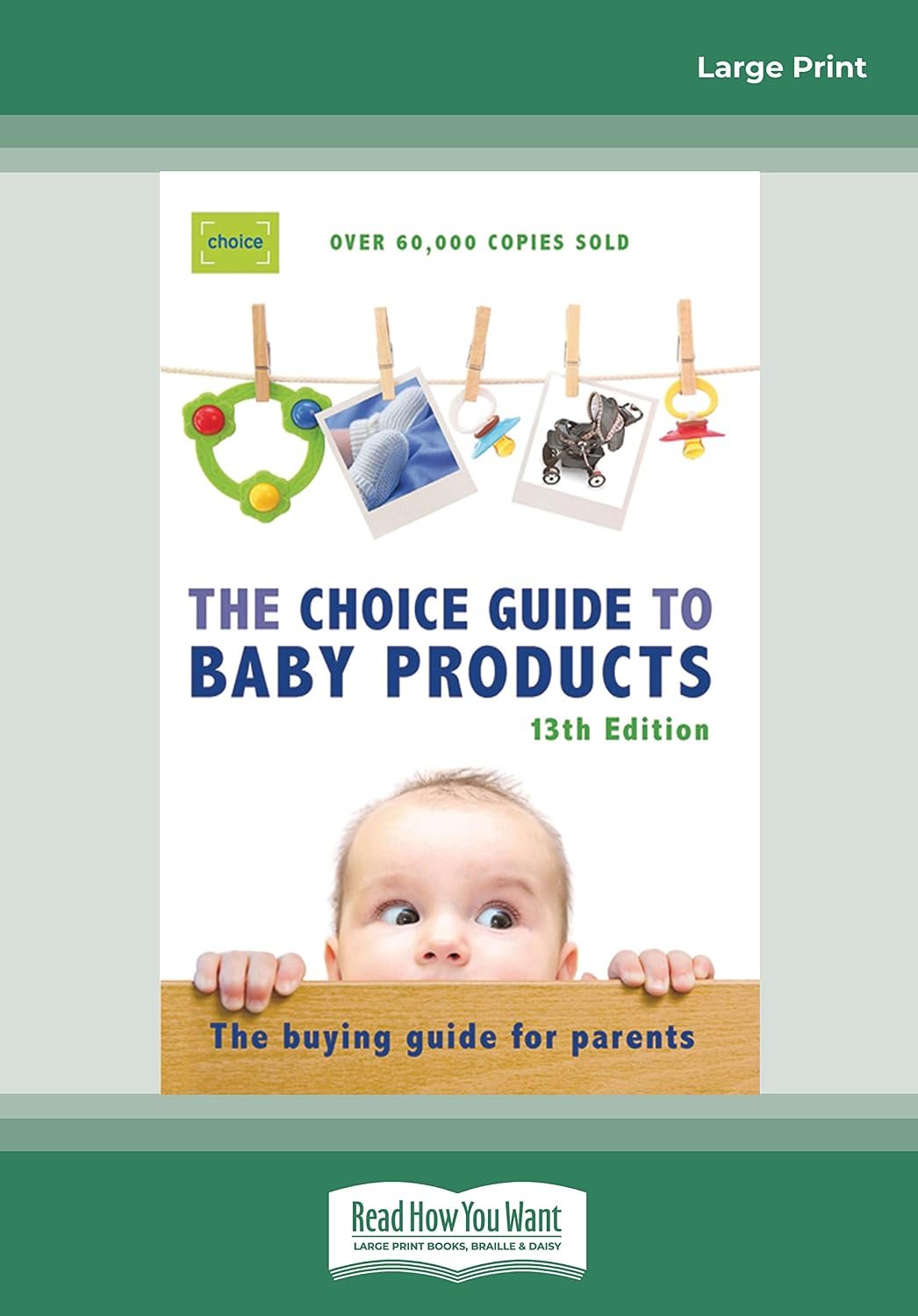
The Choice Guide to Baby Products: The Buying Guide for Parents is designed around this broader approach to preparing for a baby. Published by CHOICE Books, the guide focuses on practical information for parents and covers a wide range of everyday baby-related products and parenting considerations. The edition associated with this title was published in 2010 and contains 233 pages, with sections covering areas such as getting ready, feeding, bathing and changing, seating, travel, playtime, bedtime, laundry, household safety, and other issues facing parents.
Rather than treating baby shopping as a simple list of things to purchase, a useful buying guide can help parents think about products in terms of safety, suitability, durability, convenience, maintenance, and the child’s stage of development.
This article explores what readers can expect from The Choice Guide to Baby Products, the types of decisions it can help parents think through, and the practical principles that remain useful when choosing products for babies and young children.
Understanding the Purpose of a Baby Product Buying Guide
Preparing for a baby involves many different purchasing decisions, and they do not all have the same level of importance.
A changing mat and a stroller, for example, serve completely different purposes. A highchair involves different considerations from a cot, while toys require a different approach from car restraints. Treating every baby product as though it can be evaluated using the same criteria makes the shopping process unnecessarily difficult.
A structured guide can instead encourage parents to ask several basic questions:
- What is the product intended to do?
- Is it appropriate for the child’s age and developmental stage?
- What safety considerations apply?
- How often will it realistically be used?
- Is it easy to clean and maintain?
- Does it fit the family’s available space?
- Will it work with other products already owned?
- Are there features that provide genuine practical value?
- Is the product likely to remain useful as the child grows?
These questions are particularly valuable because baby products can vary considerably in design and complexity.
The CHOICE guide takes a broad approach rather than concentrating on one category. Its contents include feeding, bathing, changing, clothing, highchairs and other seating, transportation, playtime, bedtime, laundry, household safety, childcare, and related issues.
That makes the book relevant not only when parents are preparing a shopping list, but also when they are trying to understand how different categories fit into everyday family life.
Key Features of The Choice Guide to Baby Products
Broad Coverage of Baby Essentials
One of the central features of the guide is its broad coverage.
The book discusses categories including cots, highchairs, strollers, disposable nappies, child car restraints, baby monitors, changing accessories, toys, playpens, and walkers. It also addresses safety around the home and broader issues such as childcare and immunisation.
This broad scope can be useful for new parents who are unfamiliar with the number of product categories involved in caring for a baby.
Instead of researching every category separately, readers can use the guide as a starting point for understanding what different products are designed to do and which considerations deserve attention.
Practical Checklists and Tips
Another useful element described in the book’s published information is the inclusion of checklists and practical tips.
Checklists can be particularly useful when preparing for a new baby because it is easy to confuse something that is convenient with something that is genuinely necessary.
For example, parents may encounter dozens of products marketed as essential during the first months of a child’s life. A checklist encourages a more deliberate approach: identify the basic need first, then determine whether a particular product actually addresses it.
This can also help reduce unnecessary purchases.
Attention to Safety
Safety is an important theme throughout the guide.
Baby products often have design considerations that are not immediately obvious to adults. A product can appear simple while still requiring attention to construction, stability, restraints, moving components, ventilation, accessibility, or age suitability.
The guide includes a dedicated section addressing safety in and around the home, alongside information relating to products such as cots, car restraints, highchairs, toys, and other equipment.
Parents can use this type of information to develop a habit of evaluating products beyond appearance.
Green Buying Information
The book also includes green buying advice.
This adds another dimension to the purchasing decision. Baby products can involve plastics, fabrics, packaging, batteries, disposable materials, and equipment that may only be used for a relatively short period.
Environmental considerations may therefore include durability, repairability, reuse, washing requirements, disposal, and whether an item can be passed on to another child.
Organized by Everyday Parenting Activities
The book’s table of contents follows practical areas of family life rather than presenting only a long list of products.
The published contents include sections such as “Getting ready,” “Food and feeding,” “Bathing changing and clothing,” “Highchairs and other seating,” “Out and about,” “Playtime,” “Bedtime,” “Doing the laundry,” “Safety in and around the home,” and “Other issues.”
This organization can make the information easier to connect with real-life situations.
How The Guide Can Be Used
Preparing Before the Baby Arrives
One practical use is preparing for the arrival of a baby.
New parents often encounter long shopping lists containing everything from nursery furniture to feeding equipment. A guide can help separate categories and encourage parents to consider what will actually be needed during the earliest stage.
Instead of purchasing everything at once, parents can organize their preparation around daily activities.
Sleeping, feeding, changing, bathing, transportation, clothing, and basic safety are logical starting points.
This approach can make preparation feel more manageable.
Planning a Nursery
A baby’s sleeping environment is an area where careful product selection matters.
Parents may consider a cot, mattress, bedding, storage, lighting, and other nursery accessories. The important point is not simply how attractive the room looks, but whether the products are appropriate for their intended use and can be maintained properly.
A buying guide can help parents identify questions they should investigate before choosing nursery equipment.
For example:
- Is the product suitable for the child’s developmental stage?
- Is it stable?
- Are there accessible moving parts?
- Is it easy to clean?
- Does it require assembly?
- Will the product remain useful as the child grows?
- Does it fit the available space?
These questions are more useful than relying exclusively on appearance or marketing language.
Choosing Feeding Equipment
Feeding involves another large group of products.
Depending on the family and the child’s stage, parents may encounter bottles, breast pumps, sterilizing equipment, highchairs, bowls, cups, utensils, bibs, and food-storage products.
Not every family will need every item.
A practical guide can help parents understand the purpose of different categories and decide which ones correspond to their own circumstances.
Highchairs, for example, involve considerations such as stability, restraint systems, ease of cleaning, footprint, and storage. Feeding accessories can also accumulate quickly, making practicality an important consideration.
Organizing Bathing and Changing
Bathing and changing are repeated daily activities, which means convenience and cleaning can become just as important as initial appearance.
Changing equipment may include mats, tables, storage organizers, nappies, clothing, and cleaning supplies.
Parents can consider whether an item is easy to wipe down, whether supplies are accessible during use, and whether the setup allows the caregiver to keep necessary items organized.
A product that looks convenient in a showroom may work differently in a small bathroom or bedroom, so available space should always be part of the decision.
Preparing for Travel
Going out with a baby introduces another group of products.
Strollers, carriers, car restraints, changing bags, portable sleeping equipment, and other accessories may become part of everyday routines.
The guide specifically includes “Out and about” as a major section, as well as discussion of child car restraints and strollers among the product categories it covers.
Travel products deserve careful consideration because portability often involves trade-offs.
A lightweight item may be easier to carry, while a larger product may offer different features or storage options. The appropriate choice depends on how the family expects to use it.
Creating a Safer Home Environment
Baby-proofing is not limited to purchasing specialized safety products.
Parents can also examine the environment itself.
As children become mobile, hazards can appear at floor level, around furniture, near stairs, in kitchens, and in bathrooms. Products such as gates, latches, storage systems, and safety accessories may help address particular risks, but they should be considered alongside supervision and sensible household organization.
The guide’s dedicated safety section reflects the importance of thinking about the entire home rather than treating safety as a single product category.
Who May Find This Guide Useful?
First-Time Parents
The most obvious audience is parents preparing for their first child.
First-time parents may not yet know which baby products are standard, which are optional, and which require more careful research.
A broad guide can provide useful background before they begin comparing individual products.
Parents Building a Baby Shopping List
Parents who are overwhelmed by large online shopping catalogs may also find a structured reference useful.
Instead of browsing randomly, they can work through categories such as feeding, sleeping, changing, transportation, clothing, and play.
This can turn shopping into a more organized process.
Families Preparing on a Limited Space
Families living in apartments or smaller homes may need to think carefully about product size and storage.
Large baby equipment can occupy considerable space, and some products may only be used for a relatively short period.
A buying guide can encourage parents to consider whether a product is genuinely necessary and where it will be stored when not in use.
Relatives and Gift Givers
The information can also be useful for grandparents, relatives, and friends who want to purchase practical baby gifts.
Instead of selecting something based entirely on appearance, gift givers can think about the family’s actual needs and living situation.
A practical item that solves a genuine everyday problem may be more useful than an additional decorative accessory.
Important Things to Consider
Publication Date Matters
One important consideration is that this particular edition dates from 2010. Google Books lists the edition as published by UNSW Press in 2010, while the ISBN associated with the Amazon listing is 9781459603424.
That matters when using the book for baby-product research.
Baby products, safety standards, technology, regulations, and available models can change over time. A book published more than a decade ago should therefore be treated as a general reference rather than a substitute for checking current requirements.
This is particularly important for products involving transportation, sleep, electrical equipment, monitoring technology, and child safety.
Current Safety Standards Should Be Verified Separately
Parents should always check current safety requirements applicable in their country or region before purchasing safety-sensitive baby equipment.
A historical guide can explain useful principles, but the exact requirements may change.
This is especially relevant when buying:
- Car restraints
- Cots and sleep products
- Highchairs
- Baby monitors
- Toys
- Strollers
- Safety gates
- Products involving electrical power
Parents should consult current manufacturer instructions and relevant official safety authorities where appropriate.
A Product Guide Is Not Medical Advice
The book also touches on topics such as immunisation and other issues confronting new parents.
However, parents should distinguish general parenting information from medical advice.
Questions involving vaccinations, feeding difficulties, allergies, developmental concerns, illness, medication, or other health matters should be discussed with an appropriate healthcare professional.
A consumer buying guide can help someone understand products, but it should not replace individualized medical guidance.
Consider the Child’s Stage
A product suitable for a newborn may not be appropriate for an older baby or toddler.
Age, size, mobility, developmental stage, and intended use can all influence whether a product is appropriate.
Parents should therefore read the manufacturer’s current age, weight, size, and usage requirements before using equipment.
Think About Maintenance
Baby products frequently require cleaning.
Food spills, nappies, milk, moisture, and everyday use can create demanding cleaning requirements.
Before choosing an item, parents can consider:
- How easy is it to clean?
- Can washable components be removed?
- Are there areas where dirt can accumulate?
- Does the material require special care?
- Can replacement parts be obtained?
- Is regular maintenance required?
These details may have a bigger impact on everyday convenience than decorative features.
Consider Longevity
A product’s useful lifespan is another important consideration.
Some baby products are designed for a narrow developmental stage, while others can adapt as the child grows.
Parents can ask whether an item has adjustable components, multiple stages, replaceable parts, or a practical resale or reuse potential.
Longer usefulness can also reduce the number of products that need to be purchased over time.
Comparing General Categories of Baby Products
The purpose of a buying guide is not necessarily to identify one universal choice for every family. Different product categories solve different problems, and the appropriate option depends on circumstances.
Traditional Baby Products vs. Smart Baby Products
Traditional products generally perform their core function without requiring an app, internet connection, or additional electronics.
Smart products may provide features such as app notifications, remote monitoring, data tracking, or connectivity.
Smart technology can be convenient, but it can also introduce additional considerations such as battery life, software updates, account security, Wi-Fi reliability, and privacy.
For some families, a simple product may be sufficient. Others may value connected features.
Disposable vs. Reusable Products
Disposable products can reduce washing and maintenance, while reusable products may reduce ongoing waste and allow repeated use.
The practical decision depends on factors such as cleaning facilities, time, storage, environmental priorities, and household routines.
Neither category automatically suits every family.
Compact vs. Full-Size Equipment
Compact baby equipment can be easier to store and transport, particularly for families living in smaller homes.
Full-size products may provide different functionality or a more permanent setup.
The decision should take into account where the product will be used rather than relying only on measurements listed online.
Multi-Function vs. Single-Purpose Products
Multi-function products can combine several uses into one item, potentially reducing the amount of equipment required.
However, additional functions can sometimes make products more complicated to operate, clean, or store.
Single-purpose products may be simpler and easier to understand.
Parents can therefore ask whether each additional feature solves a genuine problem in their household.
New vs. Secondhand Products
Secondhand baby products can sometimes provide an economical way to obtain equipment, but safety-sensitive products require particular caution.
Parents should know the product’s history, inspect it carefully, confirm that all parts are present, check current safety requirements, and verify whether the product has been recalled.
For products where age, previous use, damage, or missing components can affect safety, current manufacturer guidance should be consulted before use.
Building a Practical Baby Shopping Strategy
A useful way to apply the principles behind a buying guide is to divide purchases into stages.
Stage One: Essential Daily Needs
Begin with products directly connected to basic routines:
- Sleeping
- Feeding
- Changing
- Clothing
- Bathing
- Transportation
This provides a practical foundation without requiring parents to purchase every accessory immediately.
Stage Two: Convenience Products
Once the essentials are covered, parents can consider products designed to make routines easier.
These might include organizers, additional storage, specialized feeding accessories, travel conveniences, or equipment that saves time.
The key question is whether the product addresses an actual inconvenience.
Stage Three: Development and Play
As the baby grows, different toys and play equipment may become relevant.
Parents should consider age suitability, construction, small parts, durability, cleaning, and supervision requirements.
The child’s developmental stage should guide the selection rather than marketing claims alone.
Stage Four: Growing-Child Needs
Baby equipment can quickly become obsolete as children grow.
Instead of buying everything before it is needed, parents can reassess requirements periodically.
This approach can reduce clutter and allow purchases to reflect the child’s current stage.
Frequently Asked Questions
What is The Choice Guide to Baby Products?
The Choice Guide to Baby Products: The Buying Guide for Parents is a consumer-oriented parenting and baby-product reference published by CHOICE Books. The 2010 edition covers numerous categories including feeding, bathing, changing, clothing, seating, transportation, play, bedtime, laundry, household safety, and other parenting issues.
What types of products does the book cover?
Published information lists categories including cots, highchairs, strollers, disposable nappies, child car restraints, baby monitors, changing accessories, toys, playpens, and walkers.
Is the book only about product comparisons?
No. Its published table of contents shows that it also covers broader parenting activities and household considerations, including feeding, bathing, changing, clothing, playtime, bedtime, laundry, safety, childcare, and other issues.
Is the information current for today’s baby products?
The edition associated with this title was published in 2010, so parents should not assume that all product models, standards, regulations, or recommendations remain current.
For safety-sensitive decisions, current manufacturer information and applicable local safety requirements should be checked separately.
Can first-time parents use this as a planning resource?
Yes. The broad organization of the book can help first-time parents understand the major categories of baby equipment and think through their needs before purchasing individual products.
Does the guide cover home safety?
Yes. Home safety is specifically included as a major section, and the book also discusses safety considerations associated with various baby products.
Should parents buy every product discussed?
Not necessarily. A guide is most useful as a source of information rather than a mandatory shopping list.
Every family has different living arrangements, routines, budgets, transportation needs, and childcare circumstances.
Is this guide useful for parents with limited space?
It can be useful for helping parents think about which categories of equipment are actually relevant to their household. Space requirements should still be evaluated for each individual product before purchase.
What should parents check when buying baby equipment online?
Parents should check the current product specifications, age and weight limits, dimensions, materials where relevant, assembly requirements, care instructions, safety information, warranty details, and whether the product has been recalled.
Should baby product decisions be based only on price?
Price is only one factor. Safety, suitability, durability, maintenance, storage, compatibility, and expected frequency of use can all influence whether a product makes sense for a particular household.
Conclusion
Choosing products for a baby is less about accumulating equipment and more about understanding the needs behind each purchase.
The Choice Guide to Baby Products: The Buying Guide for Parents takes a broad approach to this process, covering product categories ranging from cots and strollers to highchairs, nappies, car restraints, monitors, toys, play equipment, and changing accessories. It also extends beyond products into practical subjects such as feeding, bathing, bedtime, laundry, household safety, childcare, and other issues faced by new parents.
The book’s broad structure can be useful for parents who want to organize their thinking before making individual purchasing decisions. Rather than focusing solely on appearance or marketing claims, parents can consider questions about safety, suitability, maintenance, storage, durability, and everyday practicality.
At the same time, the edition’s 2010 publication date is an important limitation. Current baby products, safety requirements, technologies, and regulations can change, so information involving safety-sensitive equipment should always be cross-checked against current manufacturer instructions and applicable authorities.
Ultimately, a thoughtful baby-product strategy starts with the child and the family’s actual needs. A well-organized reference can provide useful background, but the final decision should take into account the child’s developmental stage, the household environment, practical routines, and current safety information.